Quilting a quilt involves the process of stitching the quilt top, batting, and backing together. Here are the general steps to quilt a quilt:
- Choose your quilting method:
- Decide on the quilting method you prefer, such as hand quilting, machine quilting, or longarm quilting. Each method has its own considerations and techniques.
- Prepare your quilt layers:
- Ensure that your quilt top is pressed and flat without any wrinkles or creases.
- Cut your batting and backing fabric to size, leaving a few inches of excess on all sides to accommodate any shifting during quilting.
- If sending to a longarm quilter, please follow their directions for preparation of quilt top and backing. They typically will have guidelines and some also provide the batting.
- Create a quilt sandwich (if hand quilting or free motion quilting on your sewing machine)
- Lay your backing fabric right side down on a large, flat surface (such as a table or the floor).
- Smooth out the backing fabric and secure it to the surface using masking tape or quilting clips to keep it taut and wrinkle-free.
- Place the batting on top of the backing, aligning the edges.
- Finally, place your quilt top right side up on the batting, aligning the edges and ensuring it is centered.
- Baste the layers:
- Starting from the center and working outwards, secure the layers together to prevent shifting during quilting.
- You can use safety pins, basting spray, or hand basting stitches to hold the layers in place. Space your basting stitches a few inches apart across the entire quilt.
- Quilt the layers:
- If hand quilting, use a quilting hoop or frame to keep the layers taut. Choose a quilting thread and needle appropriate for hand quilting and start stitching along your desired quilting lines or patterns.
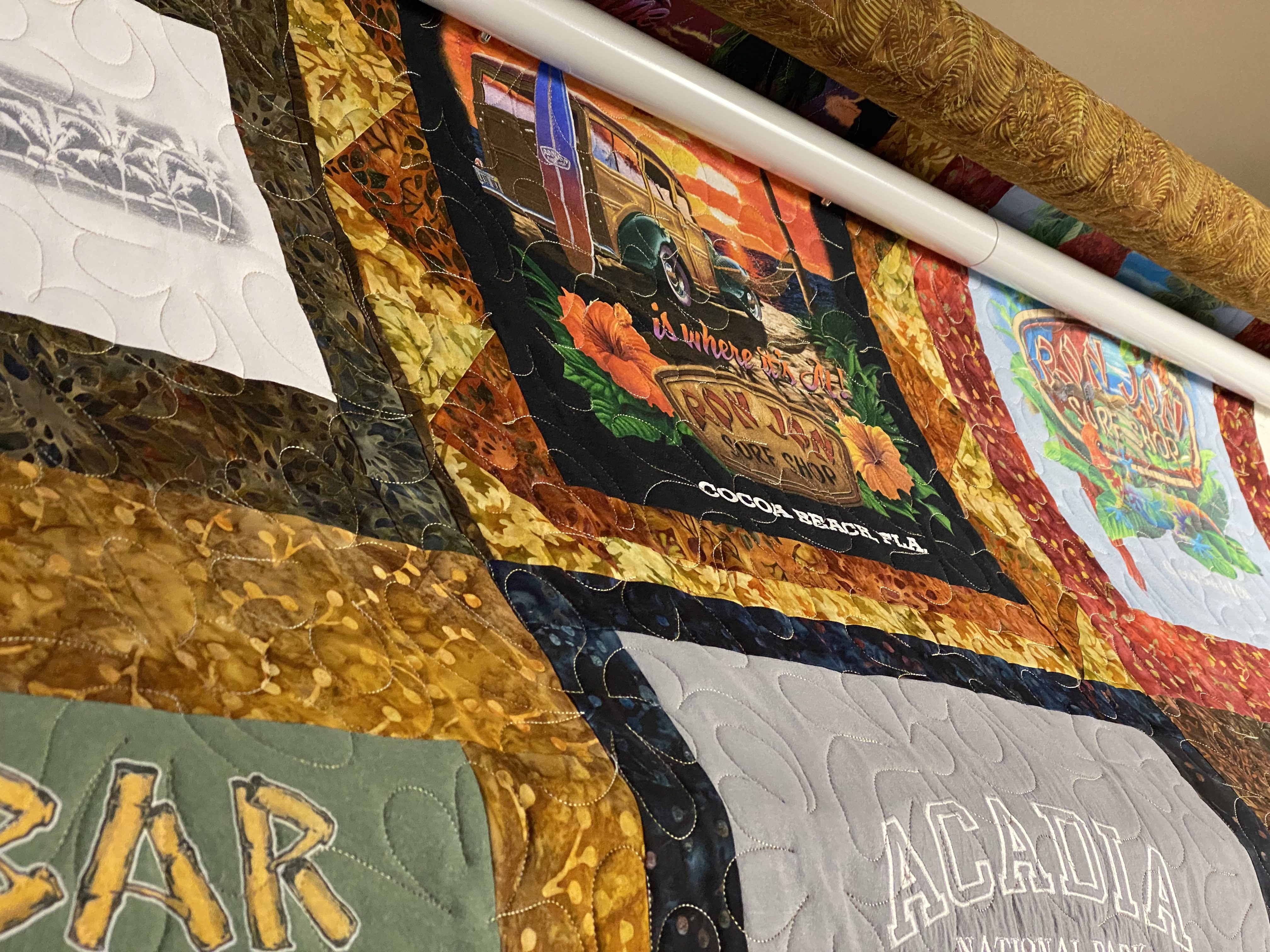
- If machine quilting, attach a walking foot or free-motion quilting foot to your sewing machine. Select appropriate quilting thread and begin stitching your desired quilting design, following your marked lines or free-motion quilting as desired.
- Finishing touches:
- After quilting the entire quilt, trim away any excess batting and backing fabric to match the quilt top’s size.
- We will discuss binding in our next session.
Remember to take your time, practice, and experiment with different quilting techniques and designs to achieve the desired result. Quilting can be a meticulous process, so enjoy the journey and celebrate the creation of your unique quilt.
If you are just starting out with free motion quilting you may find Leah Day’s videos extremely helpful and free! Her videos are extremely helpful in relieving your anxiety about free motion quilting. I was extremely fortunate to take a class with Leah and my best advice is to take your shoes off and put the arch of your foot at the top of your pedal. It made a huge difference for me!
Angela Walter’s of Quilting Is My Therapy is another favorite and free resource for both free motion quilting and longarm quilting!
Happy Quilting! See you in the next session where we discuss binding!
 Quilt Studio 62