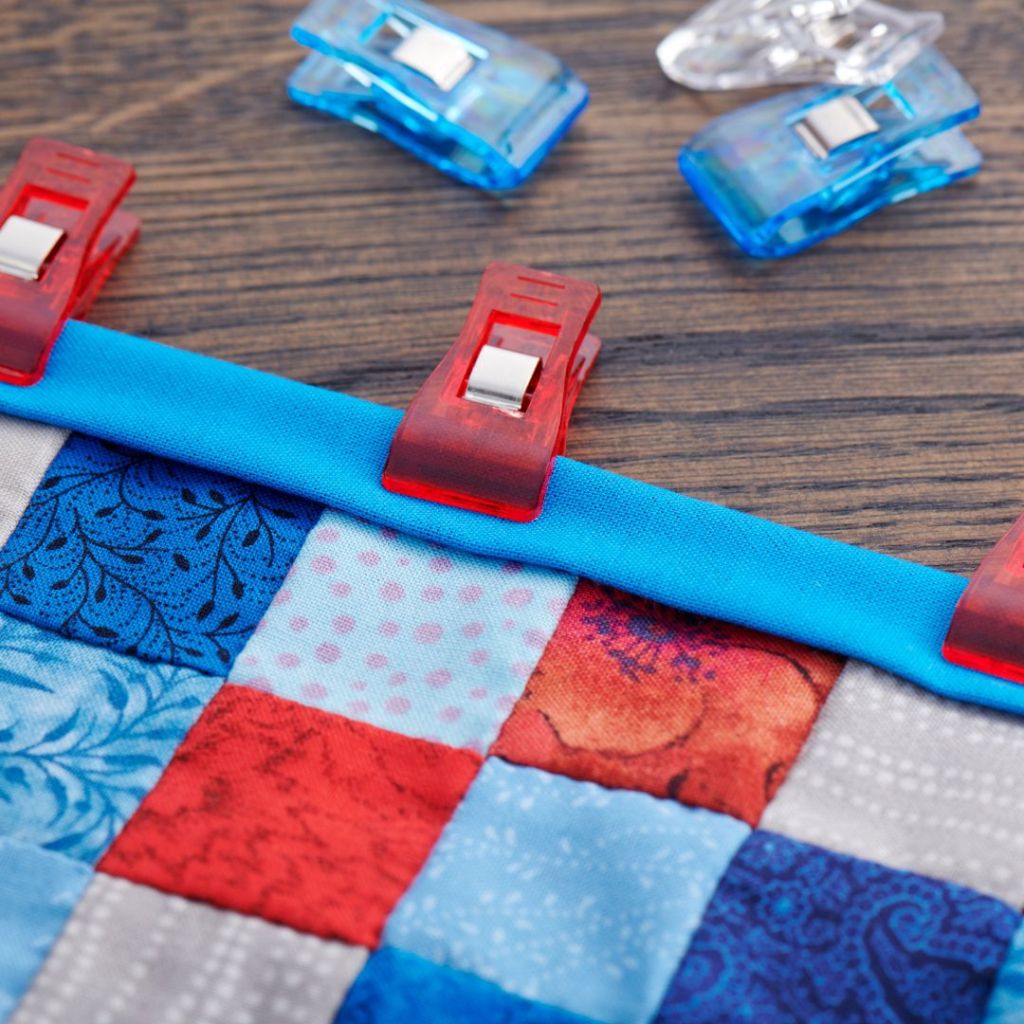
There are several ways to bind a quilt, and the method you choose depends on your preference and the look you want to achieve. Here are a few common methods for binding a quilt:
- Double-Fold Binding: This is the most traditional and widely used method. It involves cutting fabric strips, usually 2.5 inches wide, and joining them to create a long continuous strip. The strip is then folded in half lengthwise and pressed. The raw edges of the binding are sewn to the front of the quilt, and then the folded edge is folded over to the back and hand-stitched in place.
- Single-Fold Binding: This method is similar to the double-fold binding, but instead of folding the strip in half lengthwise, you fold one edge of the strip to the center and press it, then fold the other edge to meet the first fold and press again. The binding is then sewn to the front of the quilt, and the folded edge is turned to the back and machine-stitched or hand-stitched in place.
- Bias Binding: Bias binding is made from fabric that is cut on the bias (a 45-degree angle to the straight grain of the fabric). Bias binding is more flexible and can be used for quilts with curved edges. The process of attaching the bias binding is similar to the double-fold binding method.
- Flange Binding: Flange binding adds a decorative flange or accent between the quilt top and the binding. It involves attaching a narrow strip of contrasting fabric to the quilt top before attaching the binding. The binding is then sewn to the back of the quilt, folded over to the front, and machine-stitched close to the seam between the flange and the binding.
- Prairie Points Binding: Prairie points are folded fabric triangles that are sewn into the binding, creating a decorative edge. This method requires cutting and folding individual triangles and sewing them into the binding before attaching it to the quilt.
- Pillowcase Binding: This method is often used for smaller quilts or quilted projects like table runners or placemats. It involves sewing the quilt with the right sides facing and leaving an opening. After turning the quilt right side out through the opening, the raw edges of the opening are folded in and hand-stitched closed, creating a finished edge.
Remember to take your time and experiment with different binding methods to find the one that works best for your quilt and desired aesthetic.
I use option 1 above, double-fold binding and in the next post, I will cover hand-stitching and machine stitching the binding.
Happy stitching!
 Quilt Studio 62