I am so excited you are here and that I have the opportunity to share my method for making a memory quilt. So let’s get started with gathering materials.
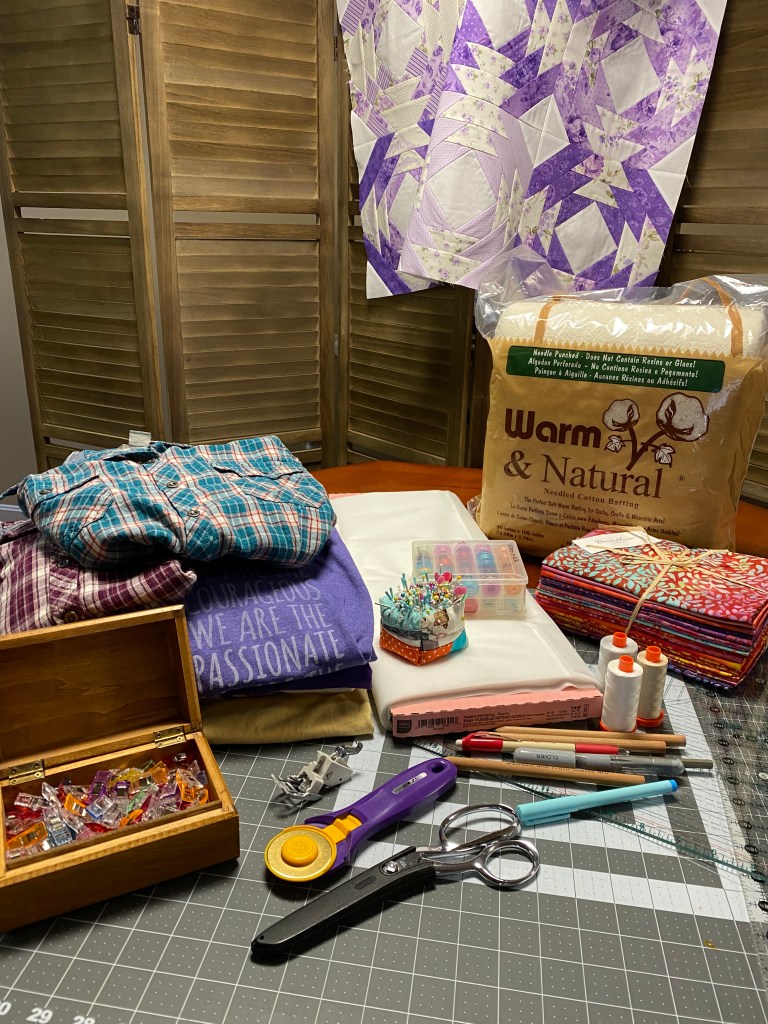
To make a memory quilt, you will need the following materials:
- Clothing or fabric: Choose the clothing or fabrics that have sentimental value to you or the person for whom you are making the quilt. This can be dress shirts, t-shirts, jeans; whatever is important for your project.
- Be sure to wash and dry all clothing so it is ready for cutting. If you are using fabric to embellish your blocks, you may want to prewash and dry. I prefer to prewash and dry my fabrics when making memory quilts so that the added fabric does not shrink once the quilt is put together.
- Additional fabric: You may need additional fabric to enhance your blocks, to use as a backing for the quilt, or to create borders.
- Interfacing – I recommend Pellon P44F, which is a very lightweight interfacing and it will not add to the weight of your quilt. Not all fabrics need to be interfaced, but if you are using t-shirts or any fabric/material that stretches, then it should be interfaced.
- Batting: Batting is the soft layer that goes between the quilt top and backing to add warmth and comfort. Some prefer cotton, polyester or a polyester/cotton blend. My favorite batting is Warm & Natural cotton batting. And I also love Dream cotton batting.
- Thread: You will need thread in various colors to sew the fabric pieces together and to quilt the layers together. I keep staple colors for piecing; white, ivory, black, and light gray. However, if your fabrics are mostly black, you may prefer to use black. I sometimes use a darker gray if I have mixed darks and mediums. I do use all cotton thread for piecing. Some of my favorites are: Aurifil or Gutermann and don’t forget you will need bobbins to match!
- Scissors, snips, and rotary cutter: Scissors are necessary for cutting and trimming fabric, A rotary cutter is used for cutting and trimming large pieces of fabric. I keep snips at my sewing machine for trimming threads, but you can also use scissors.
- Cutting mat: Cutting mats provide a stable and safe surface for cutting fabric with a rotary cutter. I purchased a Fiskars Mat from Amazon and love it! It is double sided and easy to read.
- Rulers: Quilting rulers are a necessity to ensure that you have straight edges on your blocks so that everything stitches together nicely. I would recommend a straight ruler; I use a Creative Grids 6.5 x 24″ for cutting lengths of fabric. And depending on the size of your quilt blocks, you may want either a 12.5″ or 15.5″ ruler. If you have the 15.5″ or larger, it is very versatile and you can cut small to large blocks. For instance, if you are using baby clothes, then you may need to cut 6.5″ or 8.5″ unless you are combining clothing.
- Pins, clips, needles, marking pencils: Pins hold the fabric pieces together while sewing. I love these clips for holding fabric and especially for binding. Needles are necessary for hand-sewing (which I avoid at all costs!) and while I don’t expect to hand-sew, you may prefer to hand-sew you binding and the needles will come in handy in that case. For marking pencils/pens, chalk pencils or disappearing ink pens, etc. will work. You will want to test the pens/pencils with the fabrics you will use.
- Sewing machine: A sewing machine is used for piecing. We will only be using a straight stitch so you don’t need anything fancy! However, I would recommend a walking foot if you are planning on quilting your memory quilt on your sewing machine. You will have to do some research on which walking foot fits your machine prior to purchasing. Either your local dealer or manufacturer website is a good place to start.
- Embellishments: You may want to add additional embellishments like embroidery, appliqué, or quilting designs to finish the quilt. We will discuss all of these in future posts.
That’s it! Gather your materials and get ready to make a memory quilt that will be treasured for years to come. Next week we will discuss design so it will be helpful to know how many shirts you will be working with for your project.
Let me know if you have questions on any of the materials. If you don’t have something there may be a way to utilize something that you already have and I will do my best to help you with alternatives.
This site contains product affiliate links. I may receive a commission if you make a purchase after clicking on one of these links.
 Quilt Studio 62